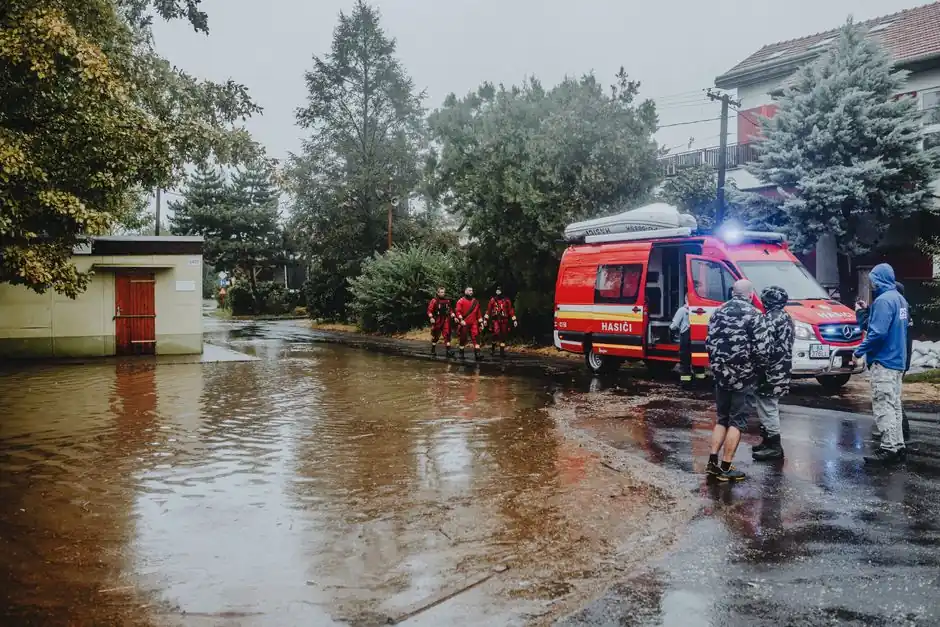
The short answer: in a water-damage emergency, your DIY role compresses to four things: protect people, stop the water, make it electrically safe, and document fast. Everything else - assessment, drying, demolition, repair - is professional work on an urgent timeline. The checks below are triage, not repair: each one routes you to the right help in the right order. If you're in an active emergency right now, call Blacklands Drywall Co. at (972) 472-8864 - then work this list while help is on the way.
Emergency vs Urgent vs Routine: Know Which You're In
Not all water damage is an emergency, and treating everything like one wastes resources while treating emergencies casually causes harm. Triage first:
EMERGENCY (act now, call now): water actively flowing and uncontrollable; any ceiling sagging or bulging; water in contact with electrical systems; sewage or floodwater contamination; structural failure in progress. These get immediate calls and immediate action - the checks below at speed.
URGENT (act today, call today): source stopped but damage is fresh and spreading; large areas affected; musty odor suggesting hidden moisture; damage discovered after unknown duration. Same-day professional response; your checks happen over the next hour, not the next ten minutes.
ROUTINE (act this week): small, stable, dry damage with a fixed source and no safety concerns - a dry stain, a small firm soft spot, cosmetic issues. Schedule an assessment normally; the other articles in this series cover these scenarios in depth.
This article is for the first two categories. If you're in the third, see our general DIY checks guide - it's the right tool for routine situations.
Check 1: People Safety - The Only First Priority
DIY: Get everyone away from immediate danger. Under a sagging ceiling? Move. Standing water near electrics? Move. Sewage backup? Move and don't go back. Pets too. This check takes seconds and outranks everything.
Call a pro when: anyone is injured, there's any electrical hazard you can't isolate with a breaker, or structural failure seems imminent (cracking sounds, rapid deformation). In those cases, call emergency services (911) first, then the contractor. Drywall can wait; people can't.
Why it matters: every emergency guide in every industry starts here because panic inverts priorities - people protect property while standing in danger. Don't. Clear first, then work the list.
Check 2: Is Water Still Flowing?
DIY: Determine immediately whether water is still entering. Burst pipe? Main shutoff - now. Appliance leak? Fixture valve. Roof leak in a storm? You can't stop the rain, but you can contain: buckets, tubs, towels, moving valuables. The question is binary: flowing or stopped?
Call a pro when: you can't find or reach the shutoff, the shutoff doesn't work (seized valves are common), water is entering from somewhere inaccessible, or it's a roof leak during an active storm. If water is still flowing after your best effort, that's the first thing you tell every professional you call - it changes their response priority.
Why it matters: flowing water multiplies damage by the minute. A burst supply line releases gallons per minute - the difference between a five-minute shutoff and a thirty-minute one is the difference between a patch and a flood cut. Speed here is the highest-leverage action on the entire list. After a freeze, our burst pipe guide covers the repair side.
Check 3: Electrical Danger Assessment
DIY: Scan for the water-electricity intersection: outlets or switches in wet walls, ceiling fixtures with water around them, water near the breaker panel, extension cords or power strips in standing water. Kill breakers for affected areas - when in doubt, kill first and investigate later.
Call a pro when: water has reached the panel, you see sparking or smell burning, or breakers trip repeatedly when reset. Don't reset tripped breakers in wet areas more than once - a tripping breaker is protecting you; overriding it is not cleverness. Electrical hazards in water emergencies may need an electrician alongside the drywall contractor - mention it on the call.
Why it matters: this is the check that prevents the emergency from becoming a tragedy. Water damage is property damage until electricity gets involved - then it's a safety emergency. Thirty seconds at the breaker panel is the cheapest life insurance on this list.
Check 4: Structural Danger Scan
DIY: Look for structural red flags: sagging or bulging ceilings (any amount), cracked or bowing walls, floors that feel soft or springy underfoot near the damage, doors suddenly sticking (framing movement). Do this visually - don't lean on, push, or test suspect structures.
Call a pro when: any structural red flag is present. Sagging ceilings are the classic emergency - our sagging ceiling guide covers the full protocol. Structural concerns compress all timelines: the contractor needs to know before arriving so they bring shoring and plan for controlled demolition.
Why it matters: structural failures don't negotiate. A ceiling that looks "mostly okay" can fail between your check and the contractor's arrival - which is why the area stays clear regardless of how stable it looks to you.
Check 5: Contamination Check
DIY: Identify the water category: clean (supply lines, rainwater intrusion), gray (washing machine, dishwasher, shower drain), or black (sewage backup, floodwater from outside, any water with visible waste). This determines everything about safe handling.
Call a pro when: the water is gray or black - immediately, and don't attempt cleanup yourself beyond keeping people away. Contaminated water carries health risks requiring protective equipment, proper disposal, and decontamination protocols. This is never DIY, not even the "checks" - observe from a distance, document with photos, and wait for professionals.
Why it matters: clean-water emergencies are property problems; contaminated-water emergencies are health problems. The response is completely different, and getting it wrong has medical consequences.
Check 6: Document Fast
DIY: Even in an emergency, take sixty seconds for documentation: phone photos of the active situation, the source if visible, the affected areas, short video with narration. You don't need artistry - you need evidence captured before anything changes.
Call a pro when: no tripwire - but do this before the emergency responders arrive if safely possible, because their work (necessary and correct) will change the scene. "As found" documentation is what insurance adjusters and contractors need to scope accurately.
Why it matters: emergency response moves fast and alters the scene - water gets extracted, materials get moved, demolition begins. Without "before" photos, the true original scope becomes a matter of memory and dispute. Sixty seconds now prevents weeks of argument later.
Check 7: Mitigate What You Safely Can
DIY: With people safe, water stopped (or contained), and electrics secured: remove standing water (mops, towels, wet vac), move valuables and electronics from the affected zone, get airflow going (fans, open windows - but not high-velocity fans aimed at suspected mold), and contain spread with towels at water edges.
Call a pro when: the water volume exceeds what towels and a household wet-vac can handle, the affected area is larger than a room, or you can't keep up with the spread. Professional water extraction equipment moves orders of magnitude more water than household tools - and in emergencies, extraction speed directly limits damage scope.
Why it matters: mitigation is your duty under most insurance policies - and it's the DIY contribution with the highest return. Every gallon you remove is damage prevented. But know the limit: when household tools can't keep up, professionals can.
Check 8: The Call Sequence
DIY: Make the calls in the right order - it matters:
- Emergency services (911) - only if there's immediate danger to people (electrical emergency, structural collapse risk, injury). Most water emergencies don't need 911; don't tie up emergency lines for property damage alone.
- The drywall/water-damage contractor - (972) 472-8864 - describe the triage results: what's happening, what's been done, what the hazards are. "Burst pipe, water stopped at the main, one ceiling sagging in the living room, breaker off for that room, photos taken" - that's a perfect emergency report.
- Your insurance company's claims line - open the claim, get the claim number, ask about emergency mitigation coverage and timeline.
- Source trades if needed - plumber for the burst pipe, roofer for the roof breach, electrician for electrical hazards. The drywall contractor coordinates the interior; the source needs its own specialist.
Call a pro when: this check IS the call. The only wrong move is delaying calls to finish checking - if you've worked checks 1-5, you know enough to call. Checks 6-10 can happen while help is en route.
Why it matters: call order affects response. Contractors prioritize based on your report's accuracy; insurers need prompt notification; source trades prevent recurrence. Calling in the right sequence with good information gets the right help fastest. Our insurance claims guide covers step three in detail.
Check 9: What NOT to Do in an Emergency
DIY: Memorize the don't list - emergencies breed bad instincts:
- Don't poke, drain, or prop sagging ceilings
- Don't enter attics or crawlspaces during active leaks
- Don't reset tripped breakers repeatedly in wet areas
- Don't use household electrical equipment (fans, vacuums) in standing water
- Don't demolish anything before documentation and professional assessment
- Don't paint, seal, or cover wet areas
- Don't throw away damaged materials before photographing them
- Don't delay calling to "handle it yourself first" - the call and the handling happen in parallel
Call a pro when: you're tempted to do any of the above because "it's getting worse." Worsening conditions mean professional help is more urgent, not that DIY heroics are more justified.
Why it matters: in emergencies, the most dangerous actions feel the most productive. The don't list exists because every item on it has injured someone or destroyed a claim.
Check 10: The Handoff - What to Tell the Pro
DIY: Prepare your handoff report while waiting: what happened (source, discovery time), what's been done (shutoffs, breakers, mitigation), current status (still flowing or stopped, growing or stable), hazards identified (electrical, structural, contamination), documentation (photos taken, where), insurance status (claim number if filed), and access info (gate codes, parking, who's on-site).
Call a pro when: you've prepared the handoff - then make sure you're reachable. Emergency response involves mid-arrival questions; a homeowner who answers the phone gets faster, better service than one who doesn't.
Why it matters: the handoff converts your triage into the contractor's action plan. Good information in means good response out - the crew arrives knowing what they're walking into, with the right equipment and the right priorities.
The Red-Flag Summary: Skip the List and Call Now When...
- Anyone is in immediate danger
- Water is flowing uncontrollably
- Any ceiling is sagging or bulging
- Electricity and water have met
- Sewage or floodwater is involved
- Structural failure is visible or audible
- You smell gas (unrelated to water, but emergencies cluster - call 911)
These bypass the checklist entirely. Call first, check later. (972) 472-8864.
What Happens After You Call: Emergency Response
Knowing the sequence keeps you calm while waiting:
- Dispatch triage - your report determines priority and what the crew brings.
- Safety assessment on arrival - the crew verifies hazards before touching anything.
- Stabilization - source confirmed stopped, dangerous sections controlled, water extracted, area secured.
- Documentation - professional photos and moisture mapping begin immediately (this serves both scoping and your insurance claim).
- Emergency mitigation - drying equipment placed, affected areas stabilized.
- The plan - full scope, timeline, and next steps explained to you before the emergency phase transitions to the repair phase.
Emergency response isn't the repair - it's making the situation safe and stable. The rebuild follows the same professional sequence as any water-damage job, starting from a stabilized scene.
The Bottom Line
Emergency triage is a different discipline from routine assessment: protect people, stop the water, secure electrics, scan for structural and contamination hazards, document fast, mitigate safely, call in the right order, avoid the don't list, and hand off cleanly. Ten checks, each routing you to the right action - and in true emergencies, the checks compress to "call now, then check while help comes." Speed with judgment beats speed alone, every time.
In an emergency right now? Call Blacklands Drywall Co. at (972) 472-8864 - describe what's happening and we'll respond. Serving Rockwall, Heath, Fate, Rowlett, and surrounding towns.