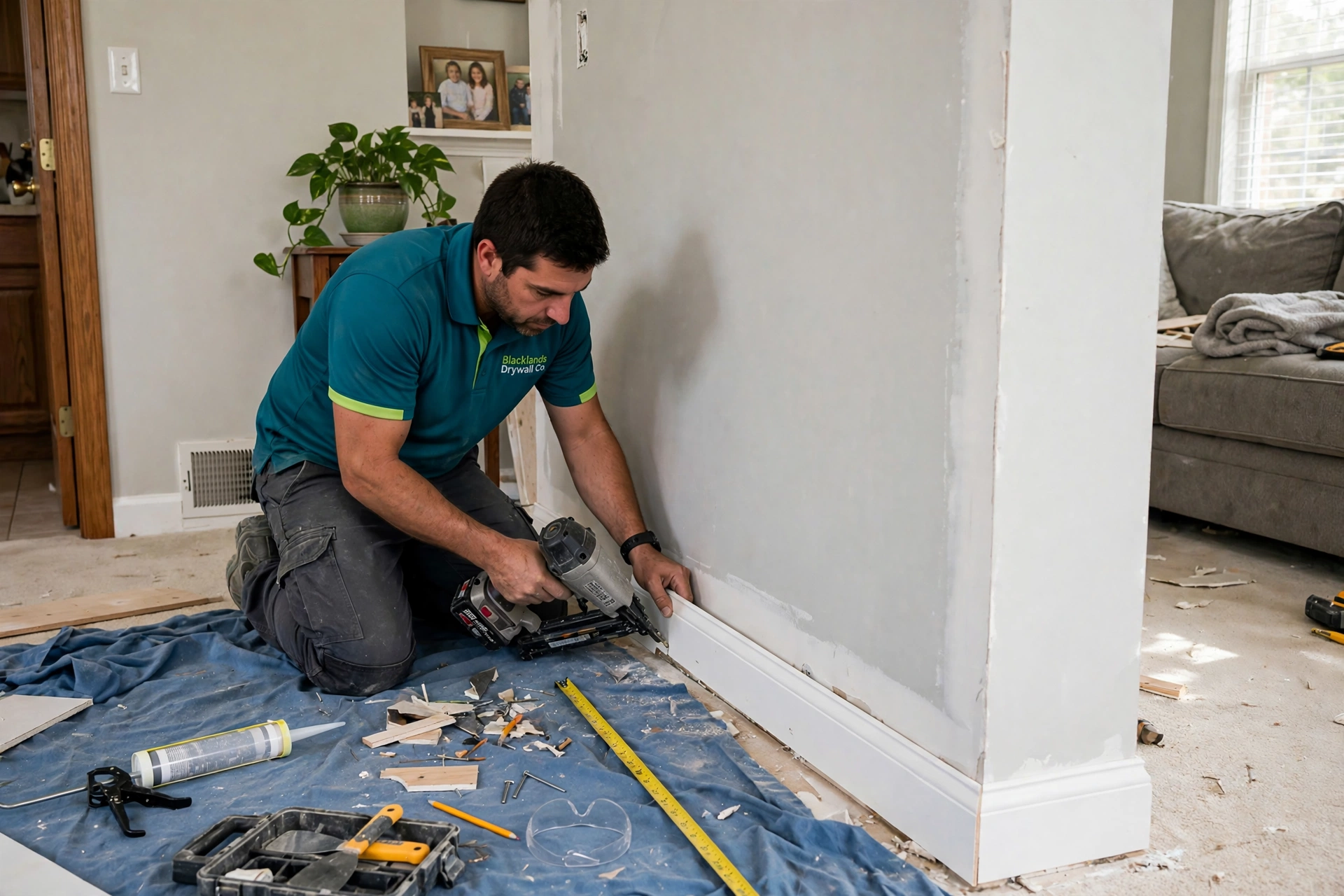
The short answer: swollen, warped, or discolored baseboards and soft drywall at the bottom few inches of a wall are classic signs of water wicking upward from the floor - whether from a slow plumbing leak, flooring moisture, flooding, or a burst pipe. This bottom-edge damage is often the first visible sign of a bigger problem hiding behind the wall, because water pools at the floor before it climbs. Don't assume it's "just the baseboard" - call Blacklands Drywall Co. at (214) 494-8955 for an assessment of what's happening behind it.
Why Damage Shows at the Bottom First
Water follows gravity. Whether it's a slow leak under a sink, moisture coming up through a slab, a washing machine supply line failure, or a flood event, water that enters a wall cavity pools at the floor first and wicks upward through the porous gypsum core and the wood or composite baseboard sitting against it. This is why bottom-edge damage is so often the earliest visible warning sign - by the time you see swelling or staining at floor level, water has typically been present in that wall cavity for some time already.
It's also why this type of damage is easy to underestimate. A few inches of discolored baseboard looks minor. But baseboards sit directly against the drywall, and if the baseboard has absorbed enough water to swell or warp, the drywall behind and above it has very likely absorbed water too - often more than is visible from the baseboard alone.
What to Look For
On the baseboard itself:
- Swelling, bubbling, or separation of the baseboard material (especially common with MDF baseboards, which absorb and swell dramatically when wet - more so than solid wood)
- Discoloration or dark staining along the top edge where it meets the wall
- Paint cracking or peeling along the baseboard
- Soft spots when pressed, or the baseboard pulling slightly away from the wall
On the drywall just above the baseboard:
- A visible waterline or discoloration a few inches up from the floor
- Soft or spongy texture when pressed gently
- Bubbling or peeling paint
- Musty smell near the floor line
On the flooring nearby:
- Cupping, warping, or discoloration in wood or laminate flooring near the affected wall
- Loose or lifting tile near the baseboard
- A musty smell from the flooring itself, which can indicate moisture has been present long enough to affect the subfloor
Common Causes of Bottom-Edge Water Damage
- Slow, hidden plumbing leaks - a supply line or drain under a sink, behind a washing machine, or inside a wall that drips steadily and goes unnoticed until the baseboard shows it.
- Flooding or standing water events - storm flooding, a major appliance failure, or a burst pipe that pooled water on the floor before anyone discovered it.
- Condensation and humidity - in humid Texas conditions, particularly near Lake Ray Hubbard, chronic condensation at exterior wall bottoms can contribute to slow baseboard and drywall deterioration over time, especially in less-ventilated rooms.
- Exterior water intrusion - grading or drainage issues that let rainwater reach a foundation wall and wick in at the base.
- AC condensate - a nearby condensate line or unit that drips consistently onto flooring near a wall, slowly wicking into the baseboard over weeks.
Identifying which of these applies matters, because a one-time flood event and a chronic slow leak lead to very different repair scopes - the flood event is likely contained once dried and confirmed, while the chronic leak needs its ongoing source found and fixed first, or the same damage returns.
Why This Often Means More Damage Than It Looks Like
Because bottom-edge damage is usually a sign that water pooled at the floor, the actual wet area inside the wall is frequently larger than what's visible at the baseboard. This is exactly the scenario our [patch vs. full sheet guide](/blog/drywall-patch-full-sheet-replacement) describes - water that's wicked up from the floor across a wall or room is typically addressed with a flood cut (a horizontal band removed at a consistent height above the highest moisture reading) rather than small individual patches at each visibly damaged spot.
It's also worth checking adjacent walls and corners, since water pooling on a floor doesn't always stay confined to where you first noticed the damage - it can travel along the baseboard line into neighboring walls before anyone sees the warning signs.
What to Do If You Notice This
- Identify and stop any active source if one is apparent - a leaking supply line, an overflowing fixture, a drainage issue bringing water to that wall from outside.
- Don't paint over or caulk the baseboard to hide swelling or discoloration - this traps moisture rather than resolving it.
- Check nearby walls and flooring for the same signs, since the damage often extends beyond the first spot you noticed.
- Get a moisture assessment before deciding on a repair scope - the visible baseboard damage is a clue, not the full picture.
- If it's from a slow, unidentified leak, finding and fixing the actual source matters as much as the drywall and baseboard repair itself - otherwise the new materials just repeat the same damage.
The Repair Approach
Once the source is identified and stopped, the typical repair sequence is:
- Moisture mapping across the affected wall(s) to determine the true extent of wicking.
- Removal of damaged baseboard and the affected band of drywall (often a flood cut, per the pattern above).
- Inspection of the wall cavity, insulation, and subfloor/flooring edge for additional moisture or damage.
- Drying verification before closing anything up.
- New drywall installation, taping, mudding, and texture matching.
- New baseboard installation, matched to the existing profile and finish.
- Prime and paint across the repaired section.
Bottom line: Baseboard swelling and bottom-wall softness are rarely just a cosmetic baseboard problem - they're usually the visible edge of water that pooled at the floor and wicked upward. Treating it as a standalone trim replacement without checking what's behind it is how small, contained damage turns into a repeat repair.