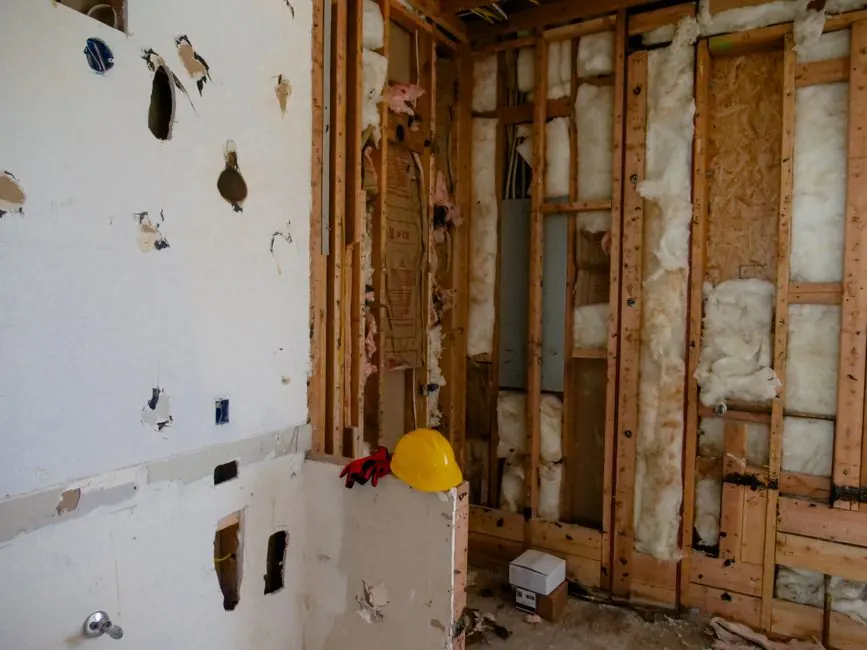
The short answer: removal decisions start with checks you can do safely - mapping the damage, identifying what's inside the wall, assessing the scale, and checking for hazards. But the actual removal of water-damaged drywall is professional work in most cases: hidden wiring and plumbing, mold in cavities, structural questions, and insurance documentation all argue for a pro. The most important DIY check on this list is knowing what NOT to tear out. In Rockwall, call Blacklands Drywall Co. at (972) 472-8864 before demolition, not after.
The Golden Rule: Assess Before You Demolish
Every other check on this list serves this rule: nothing gets torn out until the full picture is understood. Demolition is irreversible - once the drywall is down, the evidence of the original damage pattern is gone, and with it goes accurate scoping and clean insurance documentation.
Homeowners demolish early for understandable reasons: it feels like progress, the wet drywall smells bad, and waiting feels passive. But early demolition routinely turns a scoped, insured, professional job into an unscoped, undocumented mess that costs more to fix than the original damage. The checks below tell you when removal is clearly needed, what the removal will involve, and - critically - when to put the tools down and call.
Check 1: Map the Full Damage Area
DIY: Walk every affected room and mark the visible boundaries of damage - staining, soft spots, swollen baseboards, texture changes. Note which walls, how high, how far along each wall. Photograph the complete map.
Call a pro when: the damage spans multiple walls or rooms, you can't determine where it ends, or different rooms show different symptoms (stains here, soft baseboards there, musty smell somewhere else). Multi-zone damage needs professional moisture mapping - the visible boundaries are never the real boundaries, and removal scope set from visible signs alone is always wrong.
Why it matters: removal scope comes from the moisture map, not the stain map. Your DIY map is the starting point the pro refines with meters - and it prevents the classic error of removing too little (leaving wet drywall) or too much (wasting money and time).
Check 2: What's Inside the Wall?
DIY: Think about what runs through the affected walls before anyone cuts into them. Outlets and switches mean wiring. Bathrooms and kitchens mean supply and drain plumbing. Exterior walls may have insulation, and older homes can surprise you. Note every fixture, outlet, and pipe penetration on the damage map - each one is a hazard marker for demolition.
Call a pro when: the removal zone includes multiple outlets or fixtures, plumbing runs through the affected wall, or you're unsure what's inside. Cutting into a wall with live wiring or pressurized plumbing is how DIY demolition becomes an emergency room visit. Professionals locate utilities before cutting - with stud finders that detect live wire, and with the experience to read a wall's contents from its fixtures.
Why it matters: this is the check that most justifies professional removal. The wall's interior is invisible, and the consequences of guessing wrong are severe. A pro's first demolition step is always utility verification; a DIYer's is often a reciprocating saw.
Check 3: The Scale Check
DIY: Estimate the removal scope honestly. A single 2x2 soft spot is a different job from a full flood cut along three walls. Measure the affected areas and count the walls involved.
Call a pro when: the scope exceeds a small patch - roughly, anything beyond a couple of square feet, any flood-cut scenario (bottom 2-4 feet of wall), any ceiling involvement, or any multi-room damage. Small contained removal (a single soft spot with clear boundaries, no utilities nearby) is the rare DIY-feasible case - and even then, only after the moisture boundary is verified.
Why it matters: scale determines tools, containment, disposal, and skill requirements. Small removal is a patch job; large removal is a construction project. Most homeowners underestimate which one they're facing. Our patch vs. full sheet guide explains how scope drives the repair method.
Check 4: The Containment Question
DIY: Ask yourself honestly: can you seal off the work area from the rest of the house? Demolition generates enormous amounts of fine dust - gypsum dust that infiltrates every room, coats every surface, and aggravates every respiratory condition in the household. Professional containment means plastic sheeting sealed at edges, negative air pressure, and floor protection throughout the path.
Call a pro when: you can't effectively isolate the work zone, anyone in the home has asthma or respiratory issues, or the removal spans rooms you need to keep livable. Dust control is one of the least appreciated professional skills - and one of the most regretted DIY omissions. The dust from a flood cut settles for weeks.
Why it matters: containment isn't tidiness - it's health and livability. A pro-contained job leaves the rest of your house usable; an uncontained DIY demolition makes the whole house a construction zone.
Check 5: The Mold Suspicion Check
DIY: Look and smell for mold indicators around the damage - musty odors, dark spotting on the drywall surface, a history of the area staying wet for days. Check the timeline: anything wet beyond 48 hours is in the mold-risk zone (see our 48-hour guide).
Call a pro when: any mold is visible, musty odor is persistent, or the damage timeline exceeds several days of wetness. Mold in wall cavities requires containment, protective equipment, and proper disposal protocols - disturbing it without those spreads contamination through the house. This is never DIY demolition territory.
Why it matters: opening a moldy wall cavity without containment is one of the worst DIY mistakes in water damage. What was a contained problem becomes a whole-house problem in an afternoon.
Check 6: The Structural Question
DIY: Consider whether the damage could involve structure, not just drywall. Long-term leaks soften wall framing. Ceiling damage involves joists. Floors below a major leak may be affected. Look for: sagging beyond the drywall itself, soft or discolored framing visible at edges, doors or windows sticking near the damage (suggesting framing movement).
Call a pro when: any sign the damage extends beyond drywall into framing, joists, or subfloor - or when you can't tell. Structural assessment is engineering judgment, not a DIY check. Removing drywall that's the only thing holding a compromised assembly together is dangerous; pros shore and sequence structural work correctly.
Why it matters: drywall is the finish surface; the structure behind it is the building. Most water damage is finish-only, but the cases that aren't are the cases where DIY demolition causes real harm.
Check 7: The Disposal Plan
DIY: Plan honestly for debris disposal. Water-damaged drywall is heavy - saturated gypsum weighs far more than dry - and a flood cut along a few walls fills a truck bed. Do you have a vehicle that can haul it? Does your municipality accept construction debris curbside? (Most don't.) Where will moldy material go, if that's a factor?
Call a pro when: the debris volume exceeds what you can transport in a personal vehicle, mold is involved (requiring bagged, sealed disposal), or you have no disposal plan at all. Professionals include debris removal in the job - it's part of what you're paying for, and it's a bigger logistical piece than most homeowners expect.
Why it matters: demolition without a disposal plan ends with a garage full of wet drywall growing mold while you figure out the dump's hours. Plan the exit before you create the debris.
Check 8: The Insurance Coordination Check
DIY: Determine your insurance status before any removal: claim filed or not, adjuster visit scheduled or completed, documentation complete. If a claim is in play, the adjuster needs to see the damage as found - or at minimum, your thorough photo/video documentation plus the contractor's moisture mapping.
Call a pro when: a claim is filed or likely, and the adjuster hasn't seen the damage. Professional documentation (moisture maps, scoped estimates, staged photos) is what gets removal scope approved and paid. DIY demolition before the adjuster's visit can reduce or void coverage for the removed areas. Our claims guide covers the documentation standard.
Why it matters: removal is the point of no return for insurance evidence. Once it's in the dumpster, the adjuster takes your word for what was there - and adjusters are professionally skeptical of undocumented claims.
Check 9: The Drying Verification Check
DIY: Understand that removal isn't the end - it's the middle. After wet drywall comes out, the open cavity must be dried and verified dry (with meters) before new drywall goes in. Ask yourself: do you have dehumidification capacity, moisture meters, and the knowledge of what "dry" actually means in measured terms?
Call a pro when: you can't verify dryness with instruments. "It feels dry" and "it's been a week" are not verification. Closing up a damp cavity manufactures mold problems and structural deterioration that surface months later as a much bigger job. Professional drying verification is the step that separates lasting repairs from recurring nightmares - our drying guide explains the standard.
Why it matters: DIY removal followed by DIY rebuild without verified drying is the most common path to a failed water-damage repair. The demolition is the easy part; the drying discipline is the hard part.
Check 10: The Honest Skill Inventory
DIY: Take stock: have you hung drywall before? Taped and mudded seams? Matched texture? Each removal creates a rebuild, and the rebuild quality determines whether the repair disappears or announces itself forever. Removal is demolition; replacement is craftsmanship.
Call a pro when: the rebuild exceeds your finishing skills - which, for water damage involving flood cuts or full sheets, it usually does. There's no shame in this; even experienced DIYers often handle demolition and call pros for the finishing. But coordinate that plan upfront: many contractors prefer to do their own demolition because it lets them control the cut lines and scope. Ask before you swing.
Why it matters: a perfect demolition followed by a visible patch is still a visible repair. The job is only as good as its weakest phase - and for most DIYers, that's the finishing.
The Red-Flag Summary: Call Before Demolishing When...
- Damage spans multiple walls, rooms, or involves ceilings
- Wiring, plumbing, or unknown utilities run through the removal zone
- Mold is visible or strongly suspected
- The timeline exceeds 48 hours of wetness
- Structural involvement is possible or unclear
- An insurance claim is filed or likely and the adjuster hasn't documented
- You can't contain dust or dispose of debris properly
- The rebuild finishing exceeds your skill level
When in doubt, the call comes before the crowbar. (972) 472-8864.
What Happens After You Call
Professional removal and replacement follows a disciplined sequence:
- Your report - the ten checks give the contractor a precise starting picture: scope, utilities, timeline, insurance status.
- Moisture mapping and scoping - meters define the true removal boundary; utilities are located; the plan is set.
- Contained demolition - sealed work zone, methodical removal along marked lines, debris bagged and removed.
- Cavity work - insulation replaced, framing inspected and dried, mold addressed if found.
- Verified drying - meter readings confirm the cavity is dry before close-up.
- Rebuild - new drywall, taping, mudding, texture matching, prime, paint.
Each phase has its verification gate - nothing proceeds until the previous step checks out. That's the discipline that makes professional removal worth it.
The Bottom Line
Removal and replacement is where water-damage repair gets serious - and where the DIY/pro line is clearest. Your checks map the scope, flag the hazards, protect the insurance position, and tell you whether this is a contained job or a professional project. In most real water-damage scenarios, it's the latter: hidden utilities, mold risk, structural questions, and documentation requirements stack up fast. Check first, never demolish before assessment, and call when any check says so.
Facing removal scope decisions? Call Blacklands Drywall Co. at (972) 472-8864 before you demolish. We'll map the true boundary, handle the removal safely, and rebuild it invisibly. Serving Rockwall, Heath, Fate, Rowlett, and surrounding towns.